In 2018, in Katikamu Sub-county, Luwero District, 15 women with disabilities gathered under a tree in Lukomera Village. They came together and formed a group for two reasons: saving money, and to support each other as they navigated a world that too often overlooked them.
Led by Deborah Nalubega, a 42-year-old local leader with a disability, the group started as a simple Village Savings and Loan Association, with members contributing UGX 3,000 a week. But the early years were hard. Record-keeping was poor, membership was inconsistent and the community around them had little trust in them.
“The community saw us more as beggars, not savers. They had no trust in us. The members of the group had no hope that things could be better for us. Even our leaders in the disability structures told us that we could not handle and manage money effectively,” Deborah recalls.
In 2019, the Forum for Women in Democracy (FOWODE), through the Women’s Empowerment and Leadership Project (WELP), identified the Bajjabasaga Disability Women’s Group for intensive leadership and entrepreneurship mentorship, complemented by civic education on their rights and participation. Over the consequent five years, FOWODE worked alongside Deborah and the group to strengthen their leadership capacities and amplify the voices of women with disabilities in the pursuit of gender equality and greater participation in political and economic leadership.
The mentorship pushed Deborah further than she expected. In 2021, she contested for District Woman Councillor for Persons with Disabilities. She did not win but she held onto her role as Chairperson of the Disability Council in Katikamu Sub-county and refused to let the loss define what came next.
Instead, Deborah channelled everything she had learned about leadership, group dynamics and the networks she had built, into transforming her group altogether. In 2022, Bajjabasaga Disability Women’s Group was formally registered as a community-based organisation under a new name, “The Luwero District Disabled Women’s Association”. FOWODE’s Luwero office continued walking alongside her, mentoring the growing organisation in management, networking and leadership.
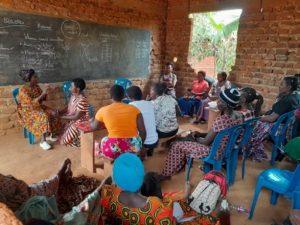
The results speak for themselves. What began as 15 discouraged women meeting under a mango tree has grown into a self-sustaining association advocating for more than 200 women with disabilities across Luwero District. With 42 registered members, a network spanning more than 27 disability groups, the group has started attracting donor funding to strengthen its operations.
“If FOWODE had not recognised us and given us a chance for mentorship, we would still be that small savings group with no purpose. The FOWODE Luwero Programme Officer, Justus Abitekaniza, even after the WELP project ended, has continued supporting us through constant courtesy visits, recommendations and networking opportunities.” Deborah says.
From a group that once struggled to earn the community’s trust, Bajjabasaga has become an organized and respected platform where women with disabilities advocate and engage at the district level. Deborah’s journey shows what becomes possible when women’s leadership and collective organising are invested in deliberately. The transformation goes beyond individual lives to changed institutions and a permanent seat at the table for those once left out.